



FTIR in Polymer Failure Analysis: A Practical Guide for QC and R&D Teams
Introduction
Polymer materials can degrade over time due to heat, oxygen, UV exposure, or mechanical stress, leading to product failures. When customer complaints or batch returns occur, quickly identifying the root cause becomes the top priority for quality teams.
Fourier Transform Infrared Spectroscopy (FTIR) has emerged as the primary tool for polymer failure analysis, thanks to its non-destructive, fast, and information-rich nature. This guide provides a practical overview of FTIR applications in polymer failure analysis, covering sample preparation, spectral interpretation, and real-world case studies.
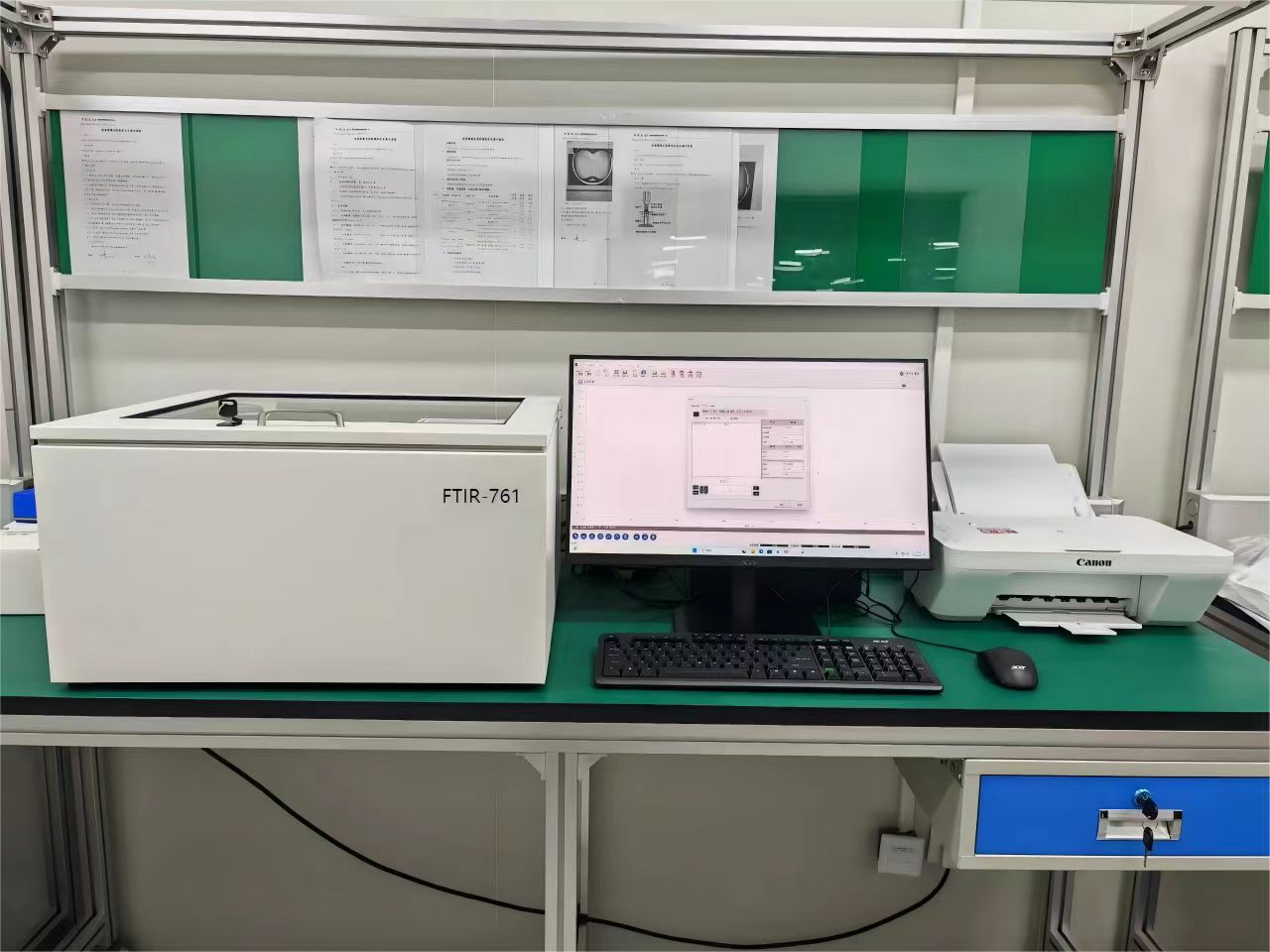
1. Why FTIR for Polymer Failure Analysis?
| Application | FTIR Advantage |
|---|---|
| Material identification | Distinct infrared fingerprints allow rapid confirmation of polymer type |
| Degradation assessment | Carbonyl index, hydroxyl index, and other ratios quantify aging |
| Contaminant analysis | Micro-sized particles can be analyzed directly with micro-FTIR |
| Surface contamination | ATR accessory analyzes the top 1–10 μm of the surface |
2. Three Common FTIR Sampling Methods for Polymers
Transmission Method
Best for: Thin films, KBr pellets
Pros: High signal-to-noise ratio; suitable for quantitative analysis
Cons: Sample preparation required; not suitable for thick specimens
Attenuated Total Reflection (ATR)
Best for: Solid and liquid samples with minimal or no preparation
Pros: Fast, non-destructive, simple operation
Cons: Penetration depth limited to 1–10 μm
Micro-FTIR
Best for: Small contaminants, layered film analysis
Pros: Spatial resolution down to 10 μm; direct on-spot analysis
Cons: Higher instrument cost; requires trained operator
3. Real-World Failure Analysis Case Studies
Case 1: Tacky Surface on Automotive Interior Parts
Symptom: PP dashboard parts returned with complaint of sticky surface
FTIR Analysis: Comparison of good vs. defective parts showed a strong carbonyl peak at 1730 cm⁻¹ in the defective sample
Conclusion: Thermo-oxidative degradation occurred during processing
Root Cause: Extended residence time in the injection molding barrel
Solution: Optimize process parameters; tighten raw material drying control
Case 2: Premature Cracking of Seals
Symptom: EPDM seals cracked after only 3 months in service
FTIR Analysis: Increased C=C peak intensity compared to virgin material
Conclusion: Ozone attack
Root Cause: Operating environment near an electric motor generated ozone
Solution: Replace with ozone-resistant material (e.g., fluorocarbon rubber)
Case 3: White Residue on ABS Housing
Symptom: White powdery substance appeared on molded ABS parts
FTIR Analysis: Residue spectrum matched mold release agent reference
Conclusion: Excessive mold release agent migrated to surface and crystallized
Root Cause: Over-application during molding process
Solution: Reduce application amount; adjust spraying parameters
4. How to Set Up FTIR Analysis for Polymer Quality Control
Build a reference spectral library – Collect spectra of all incoming raw materials to serve as baseline references
Define sampling protocols – Establish frequency and sampling locations for routine monitoring
Establish degradation indices – For example: Carbonyl Index = A₁₇₃₀ / A₁₄₅₀; define acceptable thresholds
Train QC personnel – Ensure operators can independently perform measurements and basic spectral interpretation
5. FTIR Selection Recommendations
If you're considering purchasing an FTIR for polymer analysis, here are practical configuration recommendations:
Core spectrometer: Choose a model with dynamic alignment to ensure long-term stability, especially in non-ideal environments
Essential accessory: An ATR unit—covers >90% of routine polymer analysis needs with minimal sample preparation
Software features: Ensure the software includes spectral library search and spectral subtraction functions
Future upgrade consideration: If contamination analysis is a frequent requirement, consider a micro-FTIR module for localized analysis
Conclusion
FTIR is more than an analytical instrument—it's a diagnostic tool for material characterization and problem-solving in polymer applications. By establishing a systematic FTIR analysis workflow, quality and R&D teams can significantly improve failure analysis efficiency and reduce quality-related losses.
For more application details or technical consultation, feel free to reach out.


