Instrument features:
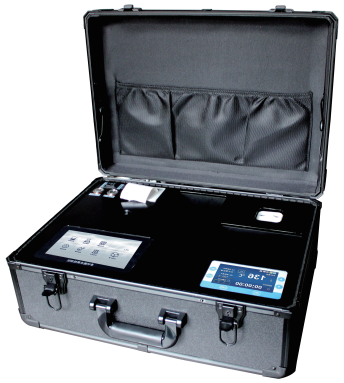
1. Features a large 7-inch color touchscreen with an intuitive graphical user interface, designed for easy operation—even while wearing laboratory gloves—and simple cleaning and maintenance. It displays comprehensive test parameter information, ensuring straightforward operation and a clear, intuitive view of results.
2. Integrates digestion and colorimetric analysis into a single unit. It comes pre-loaded with various digestion programs ready for immediate use, while also supporting custom digestion settings and one-touch operation.
3. The instrument features built-in support for 48 standard water quality parameters—including COD, Total Phosphorus, Total Nitrogen, Ammonia Nitrogen, Residual Chlorine, Total Chlorine, Hexavalent Chromium, Nitrite, and Heavy Metals. Test items can be freely combined, and concentration values are displayed directly without the need for manual conversion, ensuring highly accurate measurement results.
4. Boasts a unique design with exceptional optical performance, utilizing a holographic grating monochromator and a digital photocell detector. This configuration minimizes stray light and noise, delivering high photometric accuracy and stability.
5. Employs a cold light source with an exceptionally long lifespan of up to 100,000 hours. It offers rapid response times, allowing for immediate testing the moment the device is powered on.
6. Features categorized standard curves: in addition to the factory-calibrated curves ready for immediate use, users can easily add and calibrate their own curves. The interface is simple and intuitive, supporting full customization and editing of curves to accommodate all standard water quality parameters as well as customized expansion items. The device can store up to 20 standard curves and 500 measurement records.
7. Includes a built-in thermal printer capable of supporting both automatic and batch printing functions.
8. Offers robust data storage capabilities, equipped with a standard USB interface for transferring data to a computer, where it can be saved as files. The system also features power-loss protection to safeguard stored data.
9. Compatible with pre-prepared reagents compliant with national standards; users simply need to add the water sample to the reagent tube, significantly reducing reagent preparation time.
10. Features a built-in, high-capacity lithium battery and charging power supply, making it convenient for outdoor water sample analysis. It boasts a long service life and an impressive standby time of over six months.
Specifications:
Indication Error: ≤ ±3% (F.S.)
Repeatability: ≤ ±1%
Stability: ≤ ±0.001 Abs/10 min
Light Source Lifetime: 100,000 hours
Colorimetric Method: Colorimetric Tube
Display: 7.0-inch Color Touchscreen
Printer: Built-in Thermal Printer
Device Functions: Data Viewing, Custom Coefficient Curves, Custom Standard Curves, USB Interface
Colorimetric Mode: Colorimetric Tube Measurement
Ambient Temperature: 5–40°C
Ambient Humidity: Relative Humidity ≤ 85% (Non-condensing)
Digestion Capacity: 4 Tubes
Heating Rate: 5 minutes
Digestion Volume: 0–10 mL
Temperature Control Accuracy: ±0.5°C
Supported Features: Timer Function, One-touch Digestion, Over-temperature Protection, Clock Display, Quick Switching, Audible Alerts, Custom Modes
Water Quality Testing Catalog
(Any combination; for example, YK-PB2006 represents any combination of six parameters, while YK-PB2009 represents any combination of nine parameters):
1. COD: 5–10,000 mg/L; Rapid Digestion Spectrophotometry
2. Ammonia Nitrogen: 0–100 mg/L; Nessler Reagent Spectrophotometry
3. Total Phosphorus: 0–15 mg/L; Ammonium Molybdate Spectrophotometry
4. *Total Nitrogen: 0–10 mg/L; Alkaline Potassium Persulfate Digestion UV Spectrophotometry
5. Suspended Solids (SS): 0–100 / 100–1,000 / 1,000–4,000 mg/L; Direct Colorimetric Method
6. Residual Chlorine: 0.02–15 mg/L; Spectrophotometry
7. Total Chlorine: 0–30 mg/L; Spectrophotometry
8. Chlorine Dioxide: 0.05–30 mg/L; Spectrophotometry
9. Airborne Formaldehyde: 0.05–1.5 mg/m³; Acetylacetone Spectrophotometry
10. Formaldehyde in Water: 0.05–10 mg/L; Acetylacetone Spectrophotometry
11. Formaldehyde in Textiles: 0.2–30 mg/kg; Acetylacetone Spectrophotometry
12. Turbidity: 0–1,000 (NTU); Nephelometric Method (Scattered Light)
13. Chromaticity: 0.001–500 (PCU); Platinum-Cobalt Colorimetric Method
14. Hexavalent Chromium: 0.01–10 mg/L (Segmented); Diphenylcarbazide Spectrophotometry
15. Nitrite: 0–0.2 mg/L; N-(1-Naphthyl)ethylenediamine Dihydrochloride Spectrophotometry
16. Nitrite Nitrogen: 0.5–1.0 mg/L; N-(1-Naphthyl)ethylenediamine Spectrophotometric Method
17. Nitrate Nitrogen: 0.5–10 mg/L; Phenoldisulfonic Acid Photometric Method
18. Nitrate: 0.5–10 mg/L; Phenoldisulfonic Acid Photometric Method
19. Permanganate Index: 0.2–10.0 mg/L; Potassium Permanganate Oxidation Spectrophotometric Method
20. Sulfate: 5–100 mg/L; Barium Chromate Spectrophotometric Method
21. Phosphate: 0.05–20 mg/L; Ammonium Molybdate Spectrophotometric Method
22. Iron Ions: 0.05–3 mg/L; o-Phenanthroline Spectrophotometric Method
23. Copper Ions: 0.02–10 mg/L; Sodium Diethyldithiocarbamate Spectrophotometric Method
24. Heavy Metal Lead: 0.05–4.00 mg/L; Xylenol Orange Spectrophotometric Method
25. Cyanide: 0.0–1.0 mg/L; Isonicotinic Acid–Barbituric Acid Spectrophotometric Method
26. Arsenic: 0.05–3.00 mg/L; Arseno-antimonio-molybdenum Blue Spectrophotometric Method
27. Aluminum: 0.0–4.0 mg/L; Aluminon Spectrophotometric Method
28. Zinc: 0.01–5.0 mg/L; Zinc Reagent Spectrophotometric Method
29. Manganese: 0.02–5.0 mg/L; Potassium Periodate Spectrophotometric Method
30. Heavy Metal Cadmium: 0.02–1 mg/L; Cadmium Reagent Spectrophotometric Method
31. Heavy Metal Nickel: 0.01–5 mg/L; Dimethylglyoxime Spectrophotometric Method
32. Sulfide: 0.0–1.0 mg/L; Methylene Blue Spectrophotometry
33. Volatile Phenols: 0.1–3.0 mg/L; 4-Aminoantipyrine Spectrophotometry
34. Chloride: 0.0–5.0 mg/L; Silver Salt Photometry
35. Fluoride: 0.0–2.0 mg/L; Fluoride Reagent Spectrophotometry
36. Water Hardness: 0–50 mg/L; Acid Chrome Blue K Spectrophotometry
37. Silicate (Trace): Silicomolybdenum Blue Method, 0.05–200 µg/L; 200–2000 µg/L
38. Silicate (Macro): Silicomolybdenum Heteropoly Acid Method, 0.05–20.0 mg/L
39. Ethylene Oxide: Acetylacetone Colorimetry, 0.50–10.0 mg/L
40. Ozone: Indigo Disulfonate Spectrophotometry, 0.01–2.50 mg/L
41. Silica (Trace): Silicomolybdenum Blue Method, 0.05–200 µg/L; 200–2000 µg/L
42. Silica (Macro): Silicomolybdenum Heteropoly Acid Method, 0.05–20.0 mg/L
43. Iron (Macro): 1,10-Phenanthroline Spectrophotometry, 0.05–10.00 mg/L
44. Iron (Trace): Phenanthroline Spectrophotometry, 0.01–0.2 mg/L
45. Copper (Macro): Diethyldithiocarbamate Method, 0.01–5.00 mg/L
46. Copper (Trace): Zinc Reagent Spectrophotometry, 0.002–0.2 mg/L
47. Lead, Xylenol Orange Photometric Method, 0.05–4.00 mg/L
48. Trace Cadmium: 5-Br-PADAP Spectrophotometric Method, 0.005–0.1 mg/L
49. Silver: 3,5-Br2-PADAP Spectrophotometric Method, 0.01–1.00 mg/L
50. Methyl Orange Alkalinity: Methyl Orange Spectrophotometric Method, 5.00–150.0 mg/L; 150–1500 mg/L
51. Octadecylamine: Methyl Orange Spectrophotometric Method, 0–2.0 mg/L
52. pH: Measurement Range: -2.00 to 19.99; Electrode Method
53. Conductivity: Measurement Range: 0–200 mS/cm; Electrode Method
54. Dissolved Oxygen: 0.00–20.00 mg/L (ppm); Fluorescence Method
Download
keyword search:Multi‑Parameter Portable Water Quality Analyzer


 INQUIRY


